Rubber Testing Instruments: A Technical Framework for Material Evaluation and Process Optimization
Comprehensive analysis of rubber testing instruments for physical property evaluation, process control, and compliance. Expert insights on selecting the right equipment for tensile, hardness, abrasion, and rheological testing.
Environmental Test Chamber Climate Test Chamber Salt Spray Test Chamber UV Aging Test Chamber Thermal Shock Test Chamber Dust Test Chamber Rain Test Chamber Boiling Test Chamber Dry Dehumidification Cabinet Xenon Test Chamber Universal Tensile Test Equipment Single Column Series Double Column Series Fixtures Drying Oven 200℃ Oven 300℃ Oven 400℃ Oven 500℃ Oven Vacuum Oven 27L Vacuum Oven 64L Vacuum Oven 125L Vacuum Oven 216L Vacuum Oven 512L Vacuum Oven 729L Vacuum Oven 1000L Vacuum Oven Two-box Vacuum Oven Three-box Vacuum Oven Vibration Shaker Table System Simulated Transportation Vibration Table Vertical Vibration Table Vertical Horizontal Vibration Table XYZ Three Axis Vibration Table Rubber And Plastic Test Equipment VICAT Tester Melt Flow Index Tester Flammability Test Equipment Charpy & Izod Impact Tester Paper Packaging Test Equipment Edge And Ring Crush Tester Drop Tester Carton Compression Tester Bursting Strength Tester Battery Test Equipment Videos About Us Our Partners & Clients Certifications & Honors Factory & Gallery Why Choose HAOEN Company Profile News Company News Industry News Contact 🇺🇸 English 🇫🇷 Français 🇩🇪 Deutsch 🇪🇸 Español .ml-sw{font-family:inherit;font-size:14px;line-height:1.5}.ml-dropdown{position:relative;display:inline-block;z-index:999}.ml-dd-trigger{display:flex;align-items:center;gap:6px;cursor:pointer;padding:4px 10px;border-radius:var(--ml-radius);color:var(--ml-text);transition:background .2s}.ml-dd-trigger:hover{background:rgba(0,0,0,.05)}.ml-dd-flag{font-size:18px}.ml-dd-icon{vertical-align:middle}.ml-dd-arrow{border:4px solid transparent;border-top:5px solid currentColor;margin-top:2px;transition:transform .2s}.ml-dropdown.open .ml-dd-arrow{transform:rotate(180deg)}.ml-dd-panel{display:none;position:absolute;top:100%;left:0;min-width:100%;width:max-content;background:var(--ml-bg);border-radius:var(--ml-radius);box-shadow:0 4px 16px rgba(0,0,0,.12);padding:4px 0;margin-top:4px}.ml-dropdown.open .ml-dd-panel{display:block}.ml-dd-item{display:flex;align-items:center;gap:8px;padding:8px 14px;color:var(--ml-text);text-decoration:none;transition:background .15s;white-space:nowrap}.ml-dd-item:hover{background:rgba(0,0,0,.04)}.ml-dd-item.active{color:var(--ml-primary);font-weight:500}.ml-dd-chk{margin-left:auto;font-size:12px}.ml-pills{display:flex;flex-wrap:nowrap;gap:6px;white-space:nowrap}.ml-pill{display:inline-flex;align-items:center;gap:4px;padding:4px 12px;border-radius:var(--ml-radius);background:var(--ml-bg);color:var(--ml-text);text-decoration:none;border:1px solid rgba(0,0,0,.1);transition:all .2s;font-size:13px;white-space:nowrap}.ml-pill:hover{border-color:var(--ml-primary);color:var(--ml-primary)}.ml-pill.active{background:var(--ml-primary);color:#fff;border-color:var(--ml-primary)}.ml-pill-flag{font-size:16px}.ml-bar{display:flex;gap:0;border-bottom:2px solid rgba(0,0,0,.06);white-space:nowrap}.ml-bar-item{display:inline-flex;align-items:center;gap:4px;padding:6px 14px;color:var(--ml-text);text-decoration:none;border-bottom:2px solid transparent;margin-bottom:-2px;transition:all .2s;font-size:13px;white-space:nowrap}.ml-bar-item:hover{color:var(--ml-primary)}.ml-bar-item.active{color:var(--ml-primary);border-bottom-color:var(--ml-primary);font-weight:500}.ml-bar-flag{font-size:16px}.ml-float{position:fixed;right:20px;bottom:20px;z-index:9999}.ml-float-btn{width:48px;height:48px;border-radius:50%;background:var(--ml-primary);color:#fff;border:none;cursor:pointer;box-shadow:0 4px 12px rgba(0,0,0,.2);transition:transform .2s;display:flex;align-items:center;justify-content:center;padding:0;line-height:1}.ml-float-btn:hover{transform:scale(1.1)}.ml-float-btn svg{width:24px;height:24px;display:block}.ml-float-panel{display:none;position:absolute;bottom:56px;right:0;min-width:160px;background:var(--ml-bg);border-radius:var(--ml-radius);box-shadow:0 4px 16px rgba(0,0,0,.12);padding:4px 0}.ml-float.open .ml-float-panel{display:block}.ml-float-item{display:flex;align-items:center;gap:8px;padding:8px 14px;color:var(--ml-text);text-decoration:none;transition:background .15s}.ml-float-item:hover{background:rgba(0,0,0,.04)}.ml-float-item.active{color:var(--ml-primary);font-weight:500}.ml-float-flag{font-size:18px} function mlSwToggle(){var e=document.getElementById("mlSw");if(e)e.classList.toggle("open")}document.addEventListener("click",function(e){var s=document.getElementById("mlSw");if(s&&!s.contains(e.target))s.classList.remove("open")}); News & Updates Stay informed with the latest industry news and company updates
News & Updates
News Industry News Industry News Rubber Testing Instruments: A Technical Framework for Material Evaluation and Process Optimization 2026-08-17 Industry News 1 views The rubber industry operates at the intersection of polymer chemistry, mechanical engineering, and quality assurance. Whether producing tires, seals, gaskets, or custom molded components, manufacturers face a persistent challenge: ensuring batch-to-batch consistency while meeting increasingly stringent performance specifications. Rubber testing instruments provide the empirical foundation for this effort, transforming raw material characteristics into actionable production data. This article examines the core categories of testing equipment, their underlying principles, and their role in modern quality management systems.
Rubber compounds are viscoelastic materials whose behavior changes dramatically with temperature, strain rate, and curing history. A compound that performs well in laboratory conditions may fail prematurely in service if its dynamic properties deviate from design targets. Routine testing detects these variations before they escalate into field failures. Rubber testing instruments address multiple property dimensions, including:
Why Rubber Properties Demand Specialized Testing Methods
Processability: How the compound flows, scorches, and cures during manufacturing
Mechanical strength: Tensile, tear, and compression set characteristics
Core Categories of Rubber Testing Instruments
Thermal behavior: Glass transition temperature, vulcanization kinetics, and heat buildup
Each test method corresponds to a specific material attribute. Selecting appropriate rubber testing instruments requires understanding both the physical significance of the measurement and the practical constraints of the production environment. A well-equipped laboratory balances precision, throughput, and cost-effectiveness.
Selecting Rubber Testing Instruments for Your Laboratory
Uncured rubber compounds exhibit shear-thinning behavior that directly affects milling, extrusion, and injection molding. The Mooney viscometer, standardized under ASTM D1646, measures the torque required to rotate a disk embedded in a heated cavity. This simple test provides rapid feedback on compound viscosity and scorch safety. However, viscosity alone does not capture the full curing profile. Moving die rheometers (MDR) and oscillating disk rheometers (ODR) record the evolution of elastic modulus (S') and viscous modulus (S'') during vulcanization. From these curves, technicians derive:
Modern rheometers incorporate advanced temperature control and data acquisition systems, enabling isothermal and non-isothermal curing studies. These rubber testing instruments are indispensable for compound development and incoming material inspection.
Common Pitfalls in Rubber Testing and How to Avoid Them
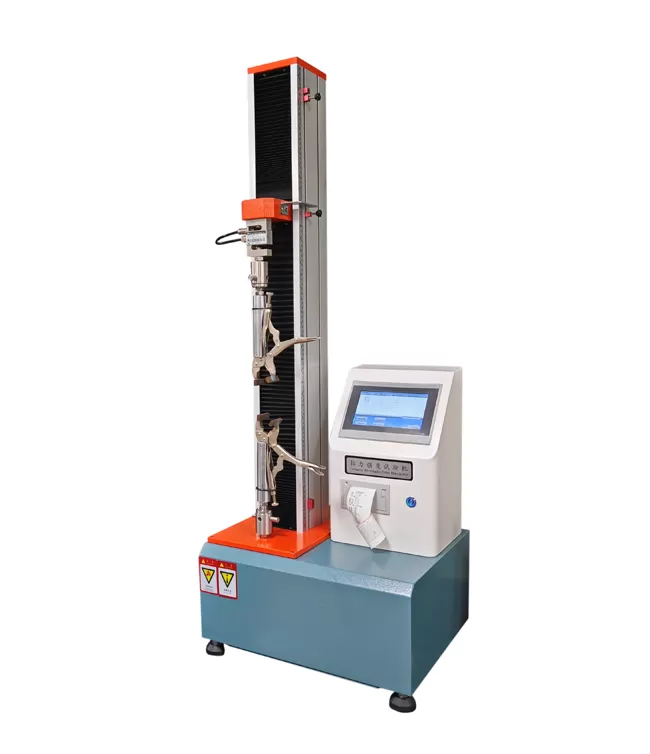
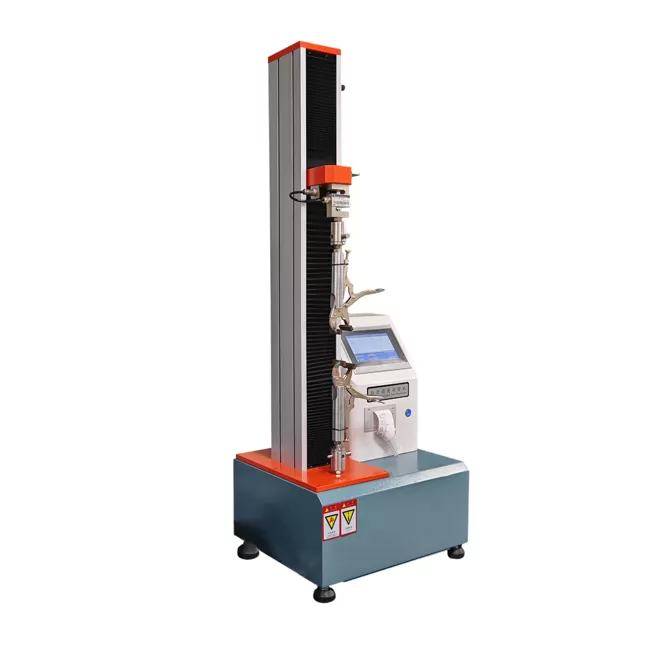
Tensile properties remain the most widely specified performance indicators for vulcanized rubber. Universal testing machines equipped with pneumatic grips and extensometers measure stress-strain behavior according to ISO 37 or ASTM D412. Key parameters include tensile strength, elongation at break, and modulus at specified strains (e.g., 100% or 300%). For products subjected to dynamic loading, tear resistance—measured using trouser, angle, or crescent specimens—provides additional insight into crack propagation behavior.
Modern tensile testers offer closed-loop control, automatic strain calculation, and statistical analysis packages. Many systems integrate with laboratory information management systems (LIMS) to track historical data and identify trends. When evaluating rubber testing instruments for tensile applications, consider crosshead speed accuracy, load cell resolution, and temperature chamber compatibility.
Integrating Testing Data with Production Quality Systems
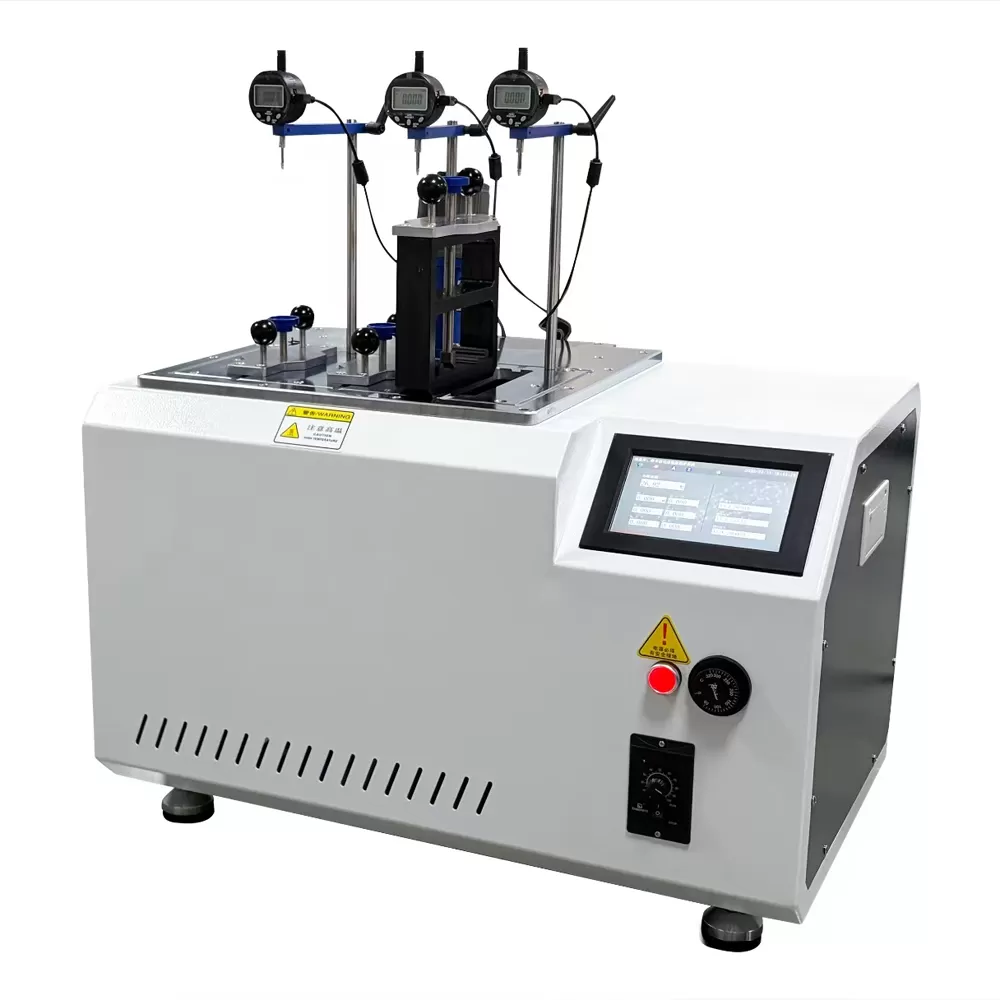
Hardness testing gauges the resistance of rubber to indentation under a specified force. Durometers—Type A for softer compounds, Type D for rigid materials—are ubiquitous in quality control because of their speed and simplicity. The international rubber hardness degree (IRHD) scale offers an alternative method with better repeatability for thin or curved specimens. Compression set apparatus measures the permanent deformation remaining after a rubber sample is compressed for a defined time and temperature. This parameter directly correlates with sealing performance and gasket longevity.
Combining hardness and compression set data helps engineers predict how a material will behave in static seal applications. While these tests are relatively inexpensive to perform, they require careful specimen preparation and conditioning to yield meaningful results.
Rubber components in tires, conveyor belts, and shoe soles experience continuous abrasive wear. The DIN abrasion tester, conforming to ISO 4649, measures volume loss against a standardized abrasive sheet. The rotating drum principle ensures uniform contact and reproducible wear patterns. The NBS (National Bureau of Standards) tester remains prevalent in North America, particularly for rubber flooring and industrial matting. These rubber testing instruments generate wear indices that correlate with service life under specific operating conditions.
Outdoor exposure, elevated temperatures, and reactive atmospheres accelerate rubber degradation. Ozone testing chambers simulate the cracking effects of atmospheric ozone, typically at concentrations of 50 to 200 parts per hundred million (pphm). Specimens are stretched and placed in the chamber for defined intervals, after which the surface is examined for crack patterns. Thermal aging ovens evaluate changes in tensile strength, elongation, and hardness after prolonged heat exposure. These accelerated tests help manufacturers assign useful service ratings to their products.
Choosing equipment involves more than comparing technical specifications. Consider the following factors:
Test volume: High-throughput QC labs benefit from automated specimen handling and multi-station configurations.
豪恩如何制造该设备
上述设备在东莞市豪恩自有厂区自主设计与制造,而非由外购部件组装而成。 这一区别对需要多台设备表现一致的实验室具有实际意义。
- 箱体几何结构、气流组织与保温层厚度在设计阶段确定,制板阶段固化
- 制冷系统选型、传感器布置与控制逻辑调试均在自有厂区完成
- 出厂前在自有校准平台完成校准并出具单台证书
- 随机质检档案可追溯至生产车间