Paper Testing Instruments: A Laboratory Equipment Planning Guide
Packaging testing is a simulation of a journey, and a simulation is only useful if the laboratory controls the same variables the journey does. The most common weakness is not the machine; it is the fixture and the conditioning of the samples.
Packaging testing is a simulation of a journey, and a simulation is only useful if the laboratory controls the same variables the journey does. The most common weakness is not the machine; it is the fixture and the conditioning of the samples.
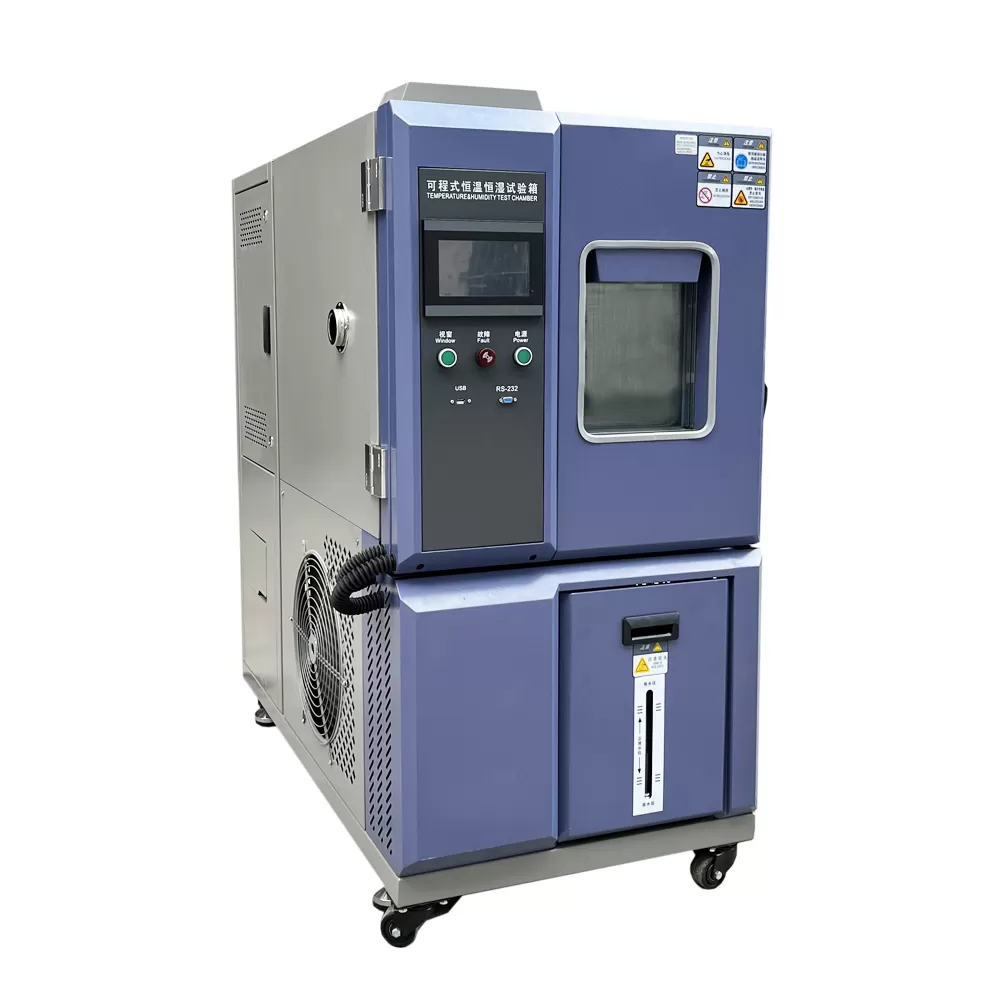
Applying that to a real purchase is easier when the equipment comes from a supplier that builds rather than assembles. 150L Climate Test Chamber is a typical example of a machine where the specification sheet is only half the story, because the fabrication and commissioning route determines how the numbers behave in service.
What to verify before you specify
1. Condition the specimens before testing
Paper and board absorb moisture and change dramatically with humidity. Testing unconditioned specimens produces results that shift with the weather in the laboratory, and comparisons between labs become meaningless.
2. The compression platen needs to be flat and aligned
A platen that is not parallel to the base introduces a bending component. The measured peak force then reflects the machine geometry as much as the box.
3. Drop height must be recorded per drop
A drop tester with a height preset still needs the actual impact height logged, and the face of the box presented to the impact needs to be identified. Otherwise a failure cannot be attributed to a specific orientation.
4. Vibration simulates the transport profile
A sine sweep is not a substitute for a random profile when the distribution is known. The right approach is to use a profile recorded from the actual route, with the correct axes and duration.
5. Fixtures must not restrain the sample unrealistically
Clamps and guides that hold the box too rigidly prevent the flexing that the test is meant to provoke, and the result becomes optimistic.
6. Sequence matters more than any single test
In transit, damage accumulates. A compression test after a drop produces different results from a drop after a compression, and shipping conditions are sequences, not isolated events.
Mistakes that show up in the acceptance report
- Testing specimens straight from the warehouse without humidity conditioning.
- Recording the drop preset rather than the measured impact height.
- Using a flat-faced platen without verifying parallelism.
- Running compression, drop and vibration as independent tests rather than a sequence.
Manufacturing capability as a risk-reduction strategy
When a qualification programme has a fixed window, the biggest risk is not the test failing. It is a delivery date moving.
Engineering drawings, chamber fabrication, control cabinet wiring and commissioning all sit under one roof, so a specification change during the project is absorbed by the factory rather than passed between suppliers.
Owning the production route means the critical path is the one we control. Non-standard chamber sizes, unusual instrumentation and special test profiles do not become a procurement problem.
The quality file travels with the machine. IQC at material intake, IPQC during assembly and OQC before crating mean the acceptance decision at your laboratory is traceable to our production floor.
- In-house Manufacturing: Every machine is engineered, welded, assembled and tested under one roof. Two production plants control tolerances from raw sheet steel to final calibration.
- OEM & ODM Engineering: Drawings, PLC logic, instrumentation and chamber geometry are developed in-house, so non-standard chamber sizes and test profiles ship without external dependencies.
- Full In-House Calibration: Temperature, humidity, pressure and load cells are calibrated on our own accredited benches before shipment, with certificates issued per unit.
- QC at Every Stage: IQC, IPQC and OQC gates sit between material intake, welding, assembly and dispatch. Nothing leaves the line without a signed inspection record.
How the equipment is produced
The production route below is the one every HAOEN machine follows. It is listed because the steps a manufacturer controls are the steps that determine whether your laboratory receives a machine that performs as specified on the day it is commissioned, and still performs two years later.
- Engineering Drawing — Chamber geometry, load frame, airflow and instrumentation are modelled and reviewed before any steel is cut.
- Material Intake — Sheet metal, compressors, sensors and electrical parts pass incoming inspection against incoming QC checkpoints.
- Cutting & Bending — CNC cutting and press braking form the chamber body, liner and door frame to millimetre drawings.
- Welding & Forming — TIG and robot welding seal the chamber, followed by stress relief and surface treatment.
- Assembly & Wiring — Refrigeration, electrical cabinets, sensors and control panels are installed and wired to the schematic.
- Debugging & Calibration — Commissioning runs temperature, humidity, vibration and load profiles; data is logged per unit.
- Packing & Documents — Crating, manuals, certificates and the QC file are completed and sealed for dispatch.
- Delivery & Support — Shipment tracking, on-site installation and operator training are arranged with local partners.
Equipment referenced in this guide
- 150L Climate Test Chamber — Climate Test Chamber, manufactured in-house with per-unit calibration.
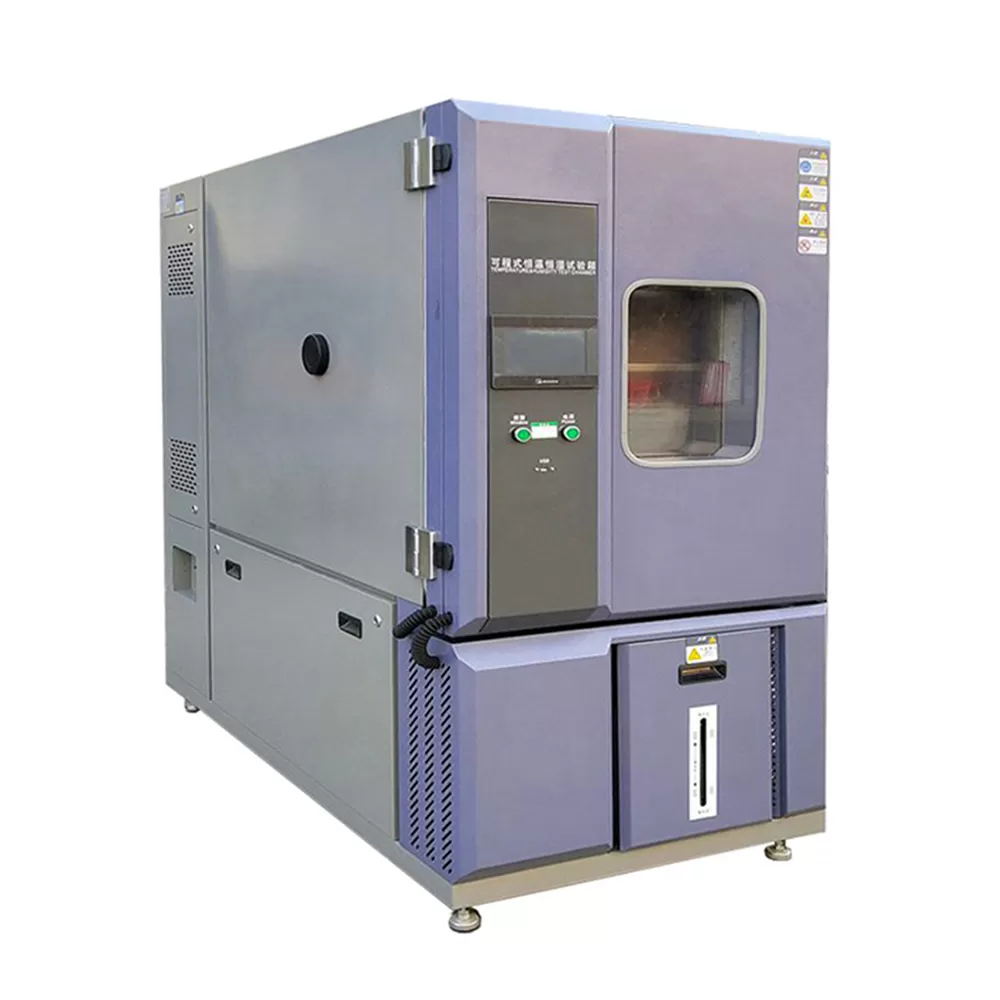
- 1000L Climate Test Chamber — Climate Test Chamber, manufactured in-house with per-unit calibration.
Conclusion
Specification is where a procurement process starts, but it is not where the result is decided. The variables that separate a repeatable test from an arguable one are the ones the manufacturer controls: the geometry of the chamber, the tightness of the weld, the stability of the control loop and the discipline of the calibration bench. Those are the variables worth asking about, because they are the ones that will still be there when the instrument is three years old and a colleague asks why the new machine and the old one give different numbers on the same specimen.
If you have a specification in front of you that has a profile, a volume and a tolerance, send it over. Our engineers will respond with a configuration, a lead time and the specific items in the manufacturing route that will affect your result.